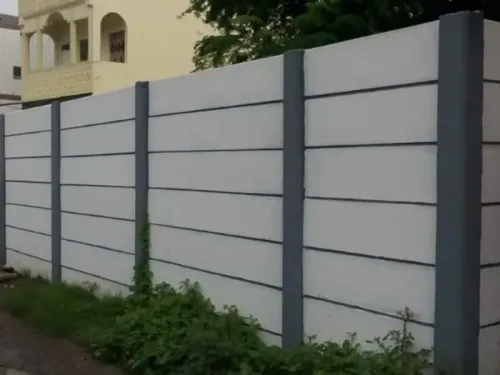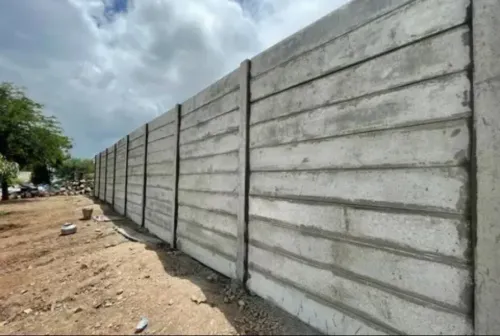


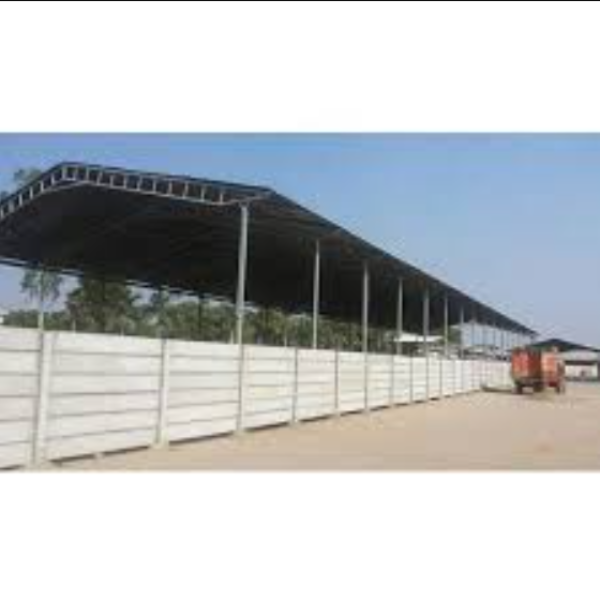
Construction schedules have become tighter than ever. Developers, contractors, industrial project owners, and infrastructure companies all work under strict timelines where delays can significantly increase costs. One practical way to accelerate site development is by choosing a Precast Concrete Compound Wall instead of traditional brick boundary construction.
Across Vijayawada, where residential, commercial, and industrial development continues to grow, precast construction methods are becoming increasingly popular because they reduce installation time without compromising strength or durability.
Unlike conventional masonry walls that require extensive on-site work, precast walls are manufactured under controlled factory conditions and assembled quickly at the project location.
Understanding Precast Concrete Technology
Precast concrete refers to structural components that are manufactured before arriving at the construction site. These components are produced using moulds, quality-controlled materials, and standardized manufacturing processes.
After curing and quality inspection, the finished panels and columns are transported to the project site for installation.
This approach separates manufacturing from site construction, allowing multiple project activities to progress simultaneously.
Reduced On-Site Construction Time
Traditional compound walls involve several labour-intensive stages, including:
- Foundation preparation
- Brick laying
- Mortar curing
- Plastering
- Finishing
- Painting
Each stage depends on weather conditions and skilled labour availability.
A precast concrete compound wall eliminates many of these time-consuming processes. Since the primary wall sections are already manufactured, installation mainly involves foundation preparation, erecting columns, positioning panels, and completing final alignment.
As a result, boundary walls can often be completed much faster than conventional alternatives.
Less Dependence on Skilled Labour
Labour shortages have become a common challenge across the construction industry. Brick masonry requires experienced masons to achieve consistent quality.
Precast wall installation generally requires a smaller installation team because the components are manufactured with precise dimensions beforehand.
Benefits include:
- Faster workforce deployment
- Reduced labour costs
- Simplified project management
- Better installation consistency
This makes precast systems particularly useful for large industrial and infrastructure projects.
Better Quality Through Factory Manufacturing
Weather conditions can affect traditional on-site construction. Rain, excessive heat, and inconsistent curing practices often influence the final quality of masonry work.
Factory manufacturing allows greater control over:
- Material proportions
- Concrete strength
- Reinforcement placement
- Dimensional accuracy
- Surface finish
These controlled conditions contribute to reliable structural performance and uniform product quality.
Cleaner Construction Sites
Construction efficiency is not only measured by speed but also by site organization.
Traditional masonry generates considerable waste, including:
- Broken bricks
- Excess mortar
- Sand
- Cement residue
- Packaging materials
Precast installation significantly reduces construction debris because most manufacturing activities occur off-site.
Cleaner construction areas improve:
- Worker safety
- Material management
- Project organization
- Overall productivity
Long-Term Structural Reliability
Speed should never come at the expense of quality.
Properly manufactured precast concrete compound walls provide:
- High structural strength
- Consistent load-bearing capacity
- Excellent weather resistance
- Long operational life
- Minimal maintenance requirements
These characteristics make them suitable for demanding environments such as factories, logistics parks, educational campuses, warehouses, and commercial developments.
Adaptability Across Different Projects
One reason precast wall systems continue gaining popularity is their flexibility.
They can be used for:
- Residential layouts
- Industrial compounds
- Farm boundaries
- Commercial buildings
- Government projects
- Educational institutions
- Storage facilities
- Infrastructure developments
Their modular design also allows future extensions whenever property boundaries need expansion.
Why Manufacturing Standards Matter
The quality of any precast wall depends largely on manufacturing expertise.
Experienced manufacturers follow standardized production processes that ensure every panel and support column meets structural requirements.
Trimurti Precast manufactures precast concrete solutions designed to support various construction applications while maintaining consistent production quality and dependable installation performance.
Working with a reliable manufacturer also helps contractors maintain predictable project schedules.
Cost Benefits Beyond Installation
Although project owners often focus on initial costs, construction efficiency creates additional financial advantages.
A faster boundary wall installation can help:
- Reduce labour expenses
- Lower equipment rental costs
- Minimize project delays
- Improve overall construction planning
- Enable earlier site utilization
When these indirect savings are considered, precast wall systems frequently offer excellent long-term value.
A Practical Choice for Modern Development
As construction projects across Andhra Pradesh continue to expand in scale and complexity, efficiency has become just as important as structural performance. A precast concrete compound wall addresses both requirements by offering faster installation, dependable quality, and long-term durability.
For developers, contractors, and property owners seeking an efficient boundary solution in Vijayawada, precast technology represents a practical investment that supports timely project completion while delivering reliable protection for years to come.