

Building hundreds of metres of boundary wall through conventional masonry can involve continuous coordination of bricks or blocks, cement, sand, water, masons, helpers, curing, plastering, and material storage. As boundary length increases, these activities can become a significant part of project management.
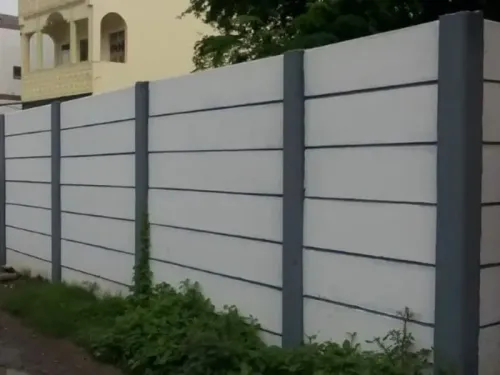
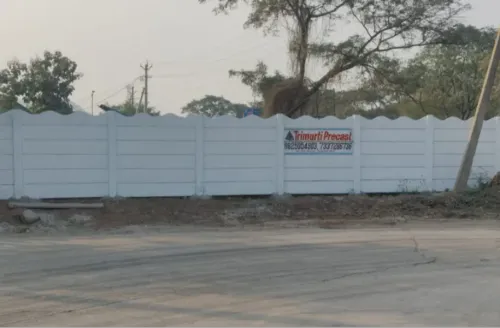
An RCC Precast Wall Manufacturer changes this workflow by producing standardized reinforced concrete wall components before they reach the construction site.
The difference is in the construction process
With conventional masonry, most wall-building activities happen directly at the project location. RCC precast construction shifts a substantial part of that work into a manufacturing environment.
The typical process involves producing reinforced posts and concrete panels, curing them appropriately, transporting them to the site, establishing the boundary alignment, installing posts, and assembling panels between them.
This approach can simplify large perimeter projects because construction becomes less dependent on continuous masonry activity.
Where this approach is particularly useful
Large sites around Vijayawada may include:
- Manufacturing facilities
- Warehouses
- Logistics yards
- Residential developments
- Educational campuses
- Solar or utility sites
- Agricultural land
- Vacant commercial plots
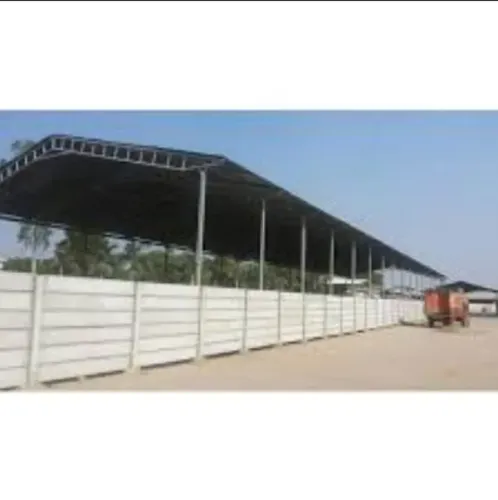
These properties can have extensive boundaries where repetitive conventional construction requires considerable time and labour.
Consistency is another important factor
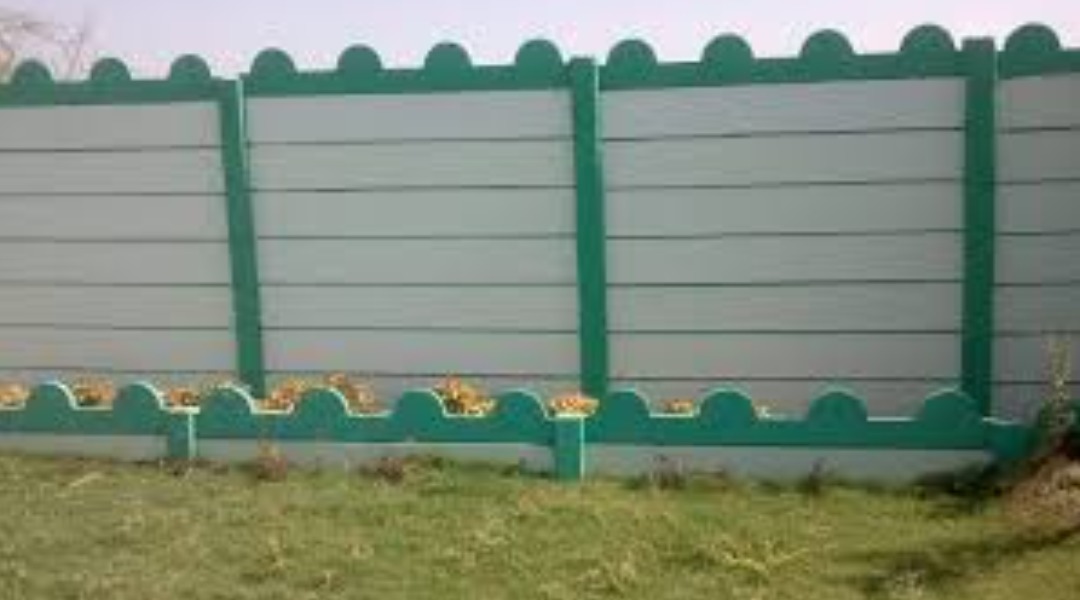
Factory moulds can help maintain repeatable panel sizes and shapes. This can create a more uniform appearance across long boundary stretches when manufacturing and installation are properly controlled.
However, precast quality should still be evaluated carefully. Buyers can ask about concrete specifications, reinforcement, panel dimensions, post spacing, curing practices, available wall heights, and installation procedures.
Site preparation remains essential
Precast construction can reduce site activity, but it does not eliminate the need for proper planning.
Accurate boundary marking is necessary before installation begins. Ground levels should be reviewed, corners identified, and gates or openings planned. Sites with substantial level differences may require additional consideration rather than simply following the existing ground profile.
Trimurti Precast manufactures precast wall components for projects in Vijayawada and the wider Andhra Pradesh market. For larger properties, sharing a basic site layout, boundary length, desired height, and intended application can help determine a suitable wall configuration.
RCC precast walls are particularly relevant when a project requires repeatable components across a substantial perimeter. Their biggest practical advantage is not merely that panels are prefabricated, but that a large amount of repetitive construction can be transferred from the site to an organized production process.